What Wattage Should a Stand Mixer Have?
The best wattage for a stand mixer depends on what you make: around 300 to 500 watts can suit many everyday tasks, while frequent heavy dough or large batches call for more capacity and a motor built for that work. Wattage alone doesn't predict how well a mixer will handle a recipe.
On this page (7 sections)
- What is the best wattage for a stand mixer?
- Does wattage tell you how much dough a mixer can handle?
- Which matters more, wattage or motor design?
- How much wattage do you need for bread dough?
- Are 800 or 900 watts better for large batches?
- What else should you compare besides wattage?
- How do you choose the right stand mixer wattage?
The best wattage for a stand mixer depends on what you make: around 300 to 500 watts can suit many everyday tasks, while frequent heavy dough or large batches call for more capacity and a motor built for that work. Wattage alone doesn't predict how well a mixer will handle a recipe.
A mixer with a large wattage number isn't automatically the best fit for a small kitchen or occasional baking. Bowl capacity, motor design, speed control, and the maker's limits all help you judge whether it suits your recipes.
What is the best wattage for a stand mixer?
For everyday mixing, a stand mixer in the 300 to 500 watt range may be enough. That can cover lighter jobs such as cake batter, frosting, and whipping, depending on the mixer's design and instructions.
For dense dough, repeated batches, or a large household, compare models with more motor power and a larger bowl. The right choice still depends on the maker's guidance for batch size and kneading speed.
The word “best” depends on how you bake. If you mostly make cookies and cakes, you may not need the same mixer as someone who kneads bread every week.
Does wattage tell you how much dough a mixer can handle?
No, wattage alone doesn't tell you a mixer's dough capacity. Check the maker's stated batch limits and instructions, then consider bowl size and the mixer's construction.
A bigger bowl gives ingredients more room, but it doesn't guarantee the motor or drive system can knead a full bowl of stiff dough. Use the stated dough limit rather than filling the bowl to its rim.
For frequent bread baking, compare mixers in our guide to heavy-duty stand mixers for big batches. If you make pizza dough, our guide to stand mixers for pizza dough covers that specific job.
Which matters more, wattage or motor design?
Consider motor design along with wattage, because the number doesn't explain how power reaches the beater. Gear type, speed control, and the maker's recommended use can all affect how a mixer handles a thick mixture.
Don't assume two mixers with the same wattage will behave the same way. One may be designed for heavier use, while another may suit lighter household mixing.
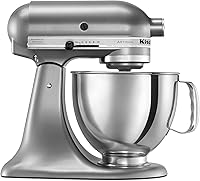
The KitchenAid Artisan 5-Qt Tilt-Head KSM150PS has 10 speed settings and a 5-quart bowl, but its wattage isn't specified here. That makes it useful as a reminder to compare the available features and instructions, not just the motor number.
For a closer look at bowl style and use, see our guide to tilt-head stand mixers.
How much wattage do you need for bread dough?
Choose a mixer by its stated dough capacity and kneading instructions, not wattage alone. Bread dough can be dense and demanding, so follow the maker's batch limits and recommended speed.
The Aucma 6.5-Qt 660W Tilt-Head lists a 660-watt motor, six speeds, and a 6.5-quart bowl. Its description says it's designed for mixing foods from egg whites to sticky bread dough, but you should still check its instructions for your recipe and batch size.
If bread is your main reason for buying a mixer, compare the details in our stand mixers for homemade bread guide. For kneading time and technique, read how long to knead dough in a stand mixer.
Are 800 or 900 watts better for large batches?
An 800- or 900-watt mixer may appeal if you often make large batches, but confirm its bowl and dough limits before choosing it. Higher wattage is one useful detail, not a promise that every heavy recipe will work.
The ZACME 8.4-Qt 800W Commercial Mixer has an 8.4-quart bowl, 11 speed settings, and a stated maximum dough amount of 3 kg (6.6 lb). That capacity may suit batch baking, provided your recipes fit its instructions.
The Kitchen in the Box 8.5-Qt 900W has an 8.5-quart bowl and 10 speed settings. Its description positions it for heavy dough, but check the manual for the batch size and kneading guidance you need.
These larger mixers can take up more room and may weigh more, so check dimensions and storage plans too. Our guide to how much a stand mixer weighs can help you plan where to keep one.
What else should you compare besides wattage?
Compare bowl capacity, speed settings, batch guidance, and mixer size alongside wattage. These details help you match the machine to your recipes and available counter or storage space.
A compact mixer may fit a small kitchen better, while a large bowl may help when you regularly bake for a group. Read our compact stand mixer guide if footprint matters more than maximum batch size.
Check the instructions for attachments and cleanup, too. A mixer that fits your routine may be more useful than one with a bigger motor number but a bowl or setup that doesn't suit your kitchen.
How do you choose the right stand mixer wattage?
Pick a mixer by the work you do most often, then check its stated limits. For cakes and occasional lighter mixing, a modest wattage may be enough; for regular dough or larger batches, look for clear dough guidance, suitable capacity, and a motor designed for that use.
If two options look similar, compare bowl size, speeds, dimensions, and the maker's instructions. For a broader overview, start with our plain-English stand mixer buying guide.
Is the best wattage for a stand mixer the highest one?
No, the best wattage for a stand mixer is the one that fits your recipes and the machine's stated limits. A higher number can be relevant for heavier work, but it doesn't replace dough capacity, motor design, or instructions.
Choose a smaller or mid-size option for routine light mixing if its guidance covers your recipes. Choose a larger model only when its batch capacity and footprint fit how you bake and store it.
Frequently asked questions
What wattage is good for a stand mixer?
A stand mixer around 300 to 500 watts may suit many everyday jobs, such as cake batter, cookies, and whipped cream. For frequent bread dough or large batches, compare the motor design, bowl capacity, and maker's dough guidance along with wattage.
A higher number by itself doesn't guarantee better performance.
Is a 300-watt stand mixer powerful enough?
A 300-watt mixer may be enough for occasional cakes, frosting, and lighter mixing, if its instructions allow those jobs. Thick cookie dough and bread dough place more strain on a mixer, so check the maker's limits and use the recommended speed and batch size.
Is 660 watts enough for bread dough?
A 660-watt mixer may handle bread dough, but wattage alone can't confirm that it suits your recipe or batch size. Check the mixer manual for dough limits, kneading speed, and rest guidance, then compare those details with how often and how much you bake.
Does a higher-wattage mixer always work better?
No. Wattage describes electrical power, but mixer design, gearing, speed control, bowl size, and allowed batch size also affect how a mixer handles a job.
Compare those details and the maker's instructions rather than choosing by the wattage number alone.