Can You Mix Sourdough in a Stand Mixer?
Yes, you can mix sourdough in a stand mixer with a dough hook. Use low speed, add ingredients gradually, and stop when the dough is smooth and elastic rather than relying only on a timer.
On this page (8 sections)
- How do you mix sourdough in a stand mixer?
- Does sourdough need a dough hook?
- What speed should you use for sourdough?
- Can a stand mixer handle wet sourdough?
- Which mixer features matter for sourdough?
- Is a stand mixer better than hand mixing sourdough?
- What mistakes should you avoid when mixing sourdough?
- Can you mix sourdough in a mixer? Choose by your batch and method
Yes, you can mix sourdough in a stand mixer with a dough hook. Use low speed, add ingredients gradually, and stop when the dough is smooth and elastic rather than relying only on a timer.
A mixer can save the repetitive work of bringing flour and water together and kneading the dough. It won't replace fermentation, shaping, or the judgment needed to tell when dough is ready.
How do you mix sourdough in a stand mixer?
Add the ingredients to the bowl, mix on low until no dry flour remains, then knead gently with the dough hook. Follow your recipe's order and your mixer's manual for speed, batch size, and operating time.
If the recipe calls for a rest after combining flour and water, stop the mixer and cover the bowl for that rest. Add starter and salt when the recipe directs, then resume mixing.
Keep the mixer at a low setting while the dough comes together. Scrape the bowl only when the machine is off, and avoid pushing dough toward a moving hook.
Look for dough that gathers around the hook and becomes more cohesive. Sourdough can stay tacky, so don't keep adding flour just to make it feel dry.
Does sourdough need a dough hook?
A dough hook is the usual mixer attachment for kneading sourdough. It moves and stretches dough while leaving the bowl available for the batch.
Use the hook made for your mixer and bowl. Check the manual if you're unsure whether the hook is intended for bread dough or whether a recipe's batch size is within the machine's limits.
A flat beater can help combine some mixtures, but it isn't a substitute for the dough hook during kneading. For a KitchenAid, see how to use its dough hook, including basic setup and handling.
What speed should you use for sourdough?
Use a low speed for mixing and kneading unless your manual gives different instructions. Low speed makes it easier to watch the dough and can reduce the chance of asking the mixer to work too hard.
Avoid jumping to a high speed to shorten kneading. The dough can move unevenly, and a fast hook makes it harder to assess texture as it changes.
Mixer controls and guidance vary by model. The guide to using a stand mixer explains the common tools and speed choices.
How can you tell when the dough is kneaded enough?
Stop when the dough looks more cohesive and elastic, and has developed some strength. It may still feel tacky, especially with a wetter recipe.
The dough should stretch more readily than it did at the start, though sourdough recipes don't all reach the same texture. Use the recipe's cues alongside what you see in the bowl.
If it smears around the bowl, tears easily, or feels unusually warm, stop and reassess instead of extending the mixing time automatically. A rest can sometimes make dough easier to handle; follow the recipe's method.
For timing guidance, see how long to knead dough in a stand mixer. Treat any time range as a starting point because flour, hydration, batch size, and mixer design affect how quickly dough develops.
Can a stand mixer handle wet sourdough?
Many stand mixers can mix wet dough, but a sticky dough may cling to the hook or bowl. A wet recipe can look messy before it comes together, so avoid correcting it with large amounts of flour.
Pause the machine if the dough climbs the hook or gets pushed out of the bowl. Scrape it down with the mixer off, then restart at low speed if the manual permits.
A mixer may be less useful for very high hydration dough that needs gentle folds instead of continuous kneading. Follow the recipe's technique and let fermentation do its work.
Which mixer features matter for sourdough?
Choose a mixer that fits your usual batch size and has a suitable dough hook. Capacity alone doesn't tell you how much bread dough a particular model can knead.
Check the maker's dough guidance, bowl design, and whether the hook is included. A larger batch can put more strain on a motor, so stay within the stated limits rather than judging by how much flour physically fits.
The Bosch Universal Plus has a 6.5-quart plastic bowl, bottom drive, and included dough hook. Bosch describes its mixer as able to knead whole-grain bread dough in large batches, so it may suit bakers who regularly make more than one loaf.
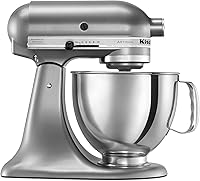
The KitchenAid Artisan has a 5-quart bowl, tilt-head design, and 10 speed settings. It may suit a home baker who wants a mixer for dough as well as whipping and general mixing.
The Ooni Halo Core is a 4.8-quart spiral mixer with a stainless steel bowl, spiral hook, and removable breaker bar. Its spiral mixing setup may appeal if dough work is your main use.
A compatible spiral dough hook can change the kneading action on some tilt-head KitchenAid mixers. The Mttobo hook is described for 4.5- and 5-quart tilt-head models, so check your model and bowl style before considering it.
Is a stand mixer better than hand mixing sourdough?
Neither method removes the need to watch texture and fermentation.
Mixer kneading is convenient for dough that benefits from a more continuous mix. Hand mixing and folds can work well for wet doughs or recipes built around rests and gentle handling.
If you bake bread often, compare the features in our stand mixers for homemade bread guide. For pizza dough and sourdough uses, the pizza dough mixer guide covers another dough style.
What mistakes should you avoid when mixing sourdough?
The main mistakes are using too much speed, exceeding the mixer’s dough limit, and mixing by time alone. Each can make it harder to get consistent dough and may place extra strain on the machine.
- Start slowly and check that the hook is moving the dough evenly.
- Don't leave a mixer kneading unattended.
- Stop the motor before scraping the bowl or adjusting the dough.
- Don't add flour just because the dough feels sticky.
- Follow the manual's limits and allow the motor to rest if instructed.
A burning smell, unusual noise, or a mixer that shifts on the counter is a reason to stop and consult the manual. Don't continue simply to finish a recipe.
Can you mix sourdough in a mixer? Choose by your batch and method
Use a stand mixer if you want help combining and kneading dough, and choose a model whose dough guidance fits your batch. Use hand mixing or folds when the recipe relies on gentle handling or when your mixer isn't suited to the quantity.
For frequent large batches, compare the Bosch's larger bowl and stated dough capacity. For broader kitchen use, the KitchenAid Artisan offers a smaller bowl and multiple speeds; for dough-focused mixing, consider the Ooni spiral design.
Before starting, review how to use a stand mixer and the recipe's fermentation steps. The mixer develops dough; time and fermentation still shape the final loaf.
Frequently asked questions
Can you mix sourdough in a stand mixer?
Yes. A stand mixer with a dough hook can combine sourdough ingredients and knead the dough.
Start on low speed, watch how the dough gathers, and stop when it looks smoother and more elastic.
Follow your mixer manual's limits for dough quantity and mixing time.
What speed should I use to mix sourdough?
Start on the lowest speed to bring flour and liquid together, then use a low kneading speed if your mixer manual allows it. High speed can make dough move too quickly to judge and may strain the machine.
Check the dough's texture as it mixes.
Can a stand mixer over-knead sourdough?
Yes, mixing too long can make sourdough overly warm or slack, and a mixer may develop gluten faster than hand mixing. Use the recipe's timing as a guide, then check whether the dough is smoother, elastic, and holding together.
Stop if it begins smearing or tearing.
Is a spiral mixer better for sourdough?
A spiral mixer is designed to knead dough with a spiral hook and rotating bowl, while a planetary stand mixer uses a different motion. Either may suit sourdough, depending on your batch size, dough style, and other kitchen jobs.
Compare each machine's stated limits and included tools.