How to Use a Stand Mixer: Speeds, Tools and Tips
To use a stand mixer, attach the tool that fits the recipe, lock the head or bowl, and start at a low speed before moving faster if needed. Use the dough hook on a low setting for yeast dough, the flat beater for batters, and the wire whip for cream and egg whites.
On this page (7 sections)
To use a stand mixer, choose the right attachment, secure the bowl and head, and start slowly. Use the flat beater for batters, the dough hook for yeast dough, and the wire whip for cream or egg whites.
A stand mixer can do more than one job, but the tool and speed matter. Your mixer’s manual takes priority because settings and attachment fit can differ by model.
How do you set up a stand mixer?
Fit the bowl and attachment before adding ingredients, then lock the head or bowl in place. Make sure the mixer is off while you attach or remove tools.
For a tilt-head mixer, raise the head, fit the attachment onto the beater shaft, and turn it until it locks. Set the bowl in its base and lower the head until it locks.
For a bowl-lift model, secure the bowl in its supports and raise it into position.
Keep the mixer on a stable, dry counter. Leave enough room to lower or raise the head without hitting a cabinet.
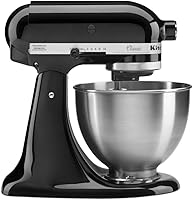
The KitchenAid Classic has a tilt-head design and includes a 4.5 qt bowl, coated flat beater, coated dough hook, and wire whip. Its 10 speeds cover tasks from stirring to whipping.
Which attachment should you use?
Match the attachment to the mixture: flat beater for batters, dough hook for yeast dough, and wire whip for airy mixtures. Follow the recipe if it names a particular tool.
When should you use the flat beater?
Use the flat beater for cookie dough, cake batter, frosting, and other mixtures that need regular mixing or beating. Start on a low speed to bring ingredients together, then move up as the recipe directs.
A flex-edge beater has a flexible edge that scrapes ingredients from the bowl as it turns. KitchenAid’s KFE5T is made for select 4.5 and 5 qt tilt-head mixer bowls, so check your model before choosing it.
When should you use the dough hook?
Use the dough hook to mix and knead yeast dough. KitchenAid recommends speed 2 for kneading bread dough on its mixers, and warns against exceeding speed 2 with yeast dough because a higher speed may damage the mixer.
Check your model’s manual for its specific instructions.
This Mttobo hook is described as fitting select 4.5 and 5 qt tilt-head mixers. It is not for bowl-lift mixers or sizes above 5 qt, so confirm your model number first.
For a closer walkthrough, see how to use a dough hook on a KitchenAid mixer. If you’re deciding whether a mixer suits bread recipes, read how long to knead dough in a stand mixer.
When should you use the wire whip?
Use the wire whip for whipping cream, egg whites, and other mixtures that need air. Begin at a lower setting to reduce splashing, then increase the speed as the mixture thickens and the recipe directs.
Stop when the mixture reaches the texture you need. Whipping too long can change its texture, so keep an eye on it near the end.
What speed should you use?
Start low to combine ingredients, use medium speeds for many batters, and reserve high speeds for whipping. The right setting depends on the recipe, attachment, and mixer model.
KitchenAid’s speed guidance assigns slow stirring and combining to the low end, mixing and beating to the middle, and whipping to higher speeds with the wire whip. For yeast dough, KitchenAid recommends the dough hook on speed 2; follow your own manual if it gives different directions.
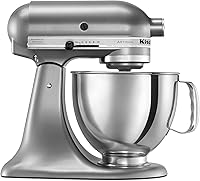
The KitchenAid Artisan also has 10 speeds, ranging from a slow stir to fast whipping. Its speed range is useful across different recipes, but it doesn’t replace the recipe’s directions.
If you’re unsure, start at the lowest setting that moves the ingredients. Increase gradually instead of switching straight to a high speed.
How can you prevent splashing and uneven mixing?
Start slowly, add ingredients in stages, and stop the mixer before scraping the bowl. These steps help keep flour and liquids in the bowl and give you more control.
Add dry ingredients in small amounts while the mixer runs at a low speed. Use a pouring shield if your mixer has one, and keep your hands, utensils, and loose clothing clear of moving parts.
If ingredients stick to the sides or bottom, turn the mixer off and wait for the attachment to stop. Scrape the bowl with a spatula, then restart at a low setting.
A flex-edge beater may reduce scraping for compatible bowls.
Don’t use a spatula while the mixer is running. If the mixture seems too heavy or the mixer slows, stop and check the recipe and manual before continuing.
How do you remove and clean the attachments?
Turn the mixer off and unplug it before removing an attachment. Lower or raise the head as directed by your model, then release the tool from the shaft.
Clean the bowl and attachments according to the manual. Some tools are dishwasher safe, while others may need hand washing; don’t assume every attachment has the same care instructions.
For care steps specific to a KitchenAid, see how to clean a KitchenAid mixer. If you’re choosing an extra tool, KitchenAid attachments worth adding can help you compare common options.
What should you remember when using a stand mixer?
Use the tool the recipe calls for, start at a low speed, and follow your mixer’s manual for fit and speed limits. Keep hands and utensils away from moving parts, and stop the mixer before scraping or changing attachments.
For yeast dough, use the dough hook and check your manual’s speed guidance. For cream or egg whites, use the wire whip and watch closely as the mixture thickens.
If you’re still deciding which jobs a mixer can handle, read what a stand mixer is used for.
Sources
Frequently asked questions
What speed should I use on a stand mixer?
Start on stir or a low speed to combine ingredients, then use a medium speed for many batters and creaming tasks. Use higher speeds for whipping cream or egg whites with a wire whip.
For yeast dough, check your mixer manual; KitchenAid recommends speed 2 with the dough hook.
Which stand mixer attachment should I use?
Use the flat beater for batters, cookie dough, and many everyday mixing tasks; the dough hook for yeast dough; and the wire whip for cream or egg whites. Check the recipe and your mixer manual, since attachment names, fit, and speed guidance can vary by model.
Can I add ingredients while the stand mixer is running?
Yes, add ingredients gradually through the bowl opening or pouring shield if your mixer has one, and keep hands and utensils away from moving attachments. For flour or other dry ingredients, use a low speed to limit splashing, and stop the mixer before scraping the bowl.
Why should I stop and scrape the bowl?
Ingredients can cling to the sides or bottom instead of mixing evenly. Stop the mixer before using a spatula to scrape the bowl, then restart at a low speed.
A flexible-edge beater may reduce how often you need to scrape, if it fits your mixer.