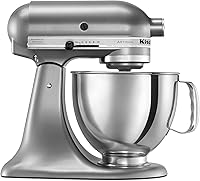
How Big of a Stand Mixer Do You Need?
For most home bakers, a 5-quart bowl is the right size. It handles about 9 dozen cookies or several loaves of bread without crowding your counter. Go 4.5 quarts for light baking and small kitchens, or 7 quarts for bulk batches and heavy dough.
On this page (10 sections)
- What bowl size fits your baking?
- Does bowl size or motor power matter more?
- How much counter space does each size take?
- Which size suits cookies, cakes and frosting?
- Which size suits bread and heavy dough?
- How does batch size affect the bowl you pick?
- When is a smaller mixer the better buy?
- When should you step up to the largest bowl?
- How we chose the reference mixers
- Which size should you buy?
The size stand mixer you need comes down to the largest batch you make regularly and the space you have for the machine. A 5-quart bowl suits most home kitchens.
Go smaller for light baking and tight counters, or larger for bread and bulk batches.
Bowl size is the number that matters most when you ask how big of a stand mixer do i need, because it sets how much dough or batter fits without overflowing. Power and weight follow the bowl size in most KitchenAid models.
This guide walks through each bowl size, what it mixes, how much counter it takes and which one fits your baking. The three mixers below are the reference points, since KitchenAid publishes batch figures for each.
What bowl size fits your baking?
Start with your busiest week, not your quietest one. The bowl should hold your largest planned batch with a little headroom so the beater can move the dough without pushing it up the sides.
KitchenAid states batch amounts for its bowls using the flat beater and 28g of dough per cookie. Those figures give you a fair way to compare sizes without guessing.
| Bowl size | Cookies per batch | Best for | Model |
|---|---|---|---|
| 4.5 qt | Up to 8 dozen | Light baking, small kitchens, one or two people | KitchenAid Classic K45SS |
| 5 qt | About 9 dozen | Everyday baking, family kitchens, mixed recipes | KitchenAid Artisan KSM150PS |
| 7 qt | 13 dozen | Bread, bulk batches, big families, small sellers | KitchenAid 7-Qt Bowl-Lift KSM70SKXX |
A 4.5-quart bowl covers cookies, cakes and frosting for a household that bakes now and then. A 5-quart bowl adds room for a slightly bigger batch and more clearance when you add ingredients.
The 7-quart bowl is aimed at dough and volume. It kneads more than 8.5 lb of bread and mashes more than 7.5 lb of potatoes, so it fits bakers who work in bigger amounts.
What a 4.5-quart bowl handles
The 4.5-quart bowl is the smallest of the three. KitchenAid says it mixes up to 8 dozen cookies in a single batch with the flat beater.
That is plenty for a batch of cookies, a two-layer cake or a bowl of whipped cream. It is tight for stiff bread dough or a double batch of anything.
The Classic K45SS has 10 speeds and a tilt-head design that lifts the beater out of the bowl for adding ingredients. It includes a stainless steel bowl, a coated flat beater, a coated dough hook and a 6-wire whip.
It weighs 22 lb and measures about 14.1 by 8.7 by 13.9 inches. That footprint fits under most upper cabinets when the head is down.
You can read more in our guide to the best tilt-head stand mixers.
What a 5-quart bowl handles
The 5-quart bowl is the middle size and the one most home bakers end up with. KitchenAid's batch figure for the Artisan is about 9 dozen cookies using the flat beater.
That extra half-quart over the Classic gives you room to add flour or fold in chips without the batter climbing the sides. It also leaves more space when you whip cream or egg whites.
The Artisan KSM150PS runs on 10 speeds with a slide control. It includes a pouring shield for mess-free mixing, and the tilt-head design gives you clear access to the bowl.
It measures about the same as the Classic at 14.1 by 8.7 by 13.9 inches.
What a 7-quart bowl handles
The 7-quart bowl is for volume and heavy dough. KitchenAid says it mixes 13 dozen cookies per batch and kneads over 8.5 lb of bread.
That size suits a large family, a weekend baking habit or anyone who sells at a farmers market. The bowl is deep enough that a big dough ball stays in place while the hook works.
The KSM70SKXX has 11 speeds, including a half speed for folding delicate ingredients like blueberries and egg whites. It comes with a double flex edge beater, a coated flat beater, a coated dough hook, an 11-wire whip and a pouring shield.
KitchenAid rates its motor at 500 watts.
Does bowl size or motor power matter more?
Bowl size matters more for most bakers, because it decides whether your recipe fits. Power becomes the deciding factor once you move into stiff bread dough and larger batches.
A big motor in a small bowl does not help if the dough overflows. A big bowl on a weak motor struggles with dense dough.
The two numbers work together.
KitchenAid's 7-quart bowl-lift mixer pairs its large bowl with more power and a 3-point locking bowl for stability with heavy, dense ingredients. The smaller tilt-head models use lighter builds aimed at everyday mixing.
The lesson is simple. Match the bowl to your batch first, then check that the mixer is built for the dough you plan to knead.
A tilt-head model with a 4.5 or 5-quart bowl is fine for cookies and cakes. Heavy bread rewards a bowl-lift design.
If bread is your main use, our roundup of the best heavy duty stand mixers compares models built for that job.
How much counter space does each size take?
Plan for roughly 14 inches of depth and 9 inches of width for the compact tilt-head models. The 7-quart bowl-lift takes more room at about 14.6 by 11.3 by 16.5 inches.
Those are cabinet footprints. You also need clearance to use the mixer.
A tilt-head model needs headroom to tilt back. A bowl-lift model needs room above to lift the bowl onto the pins.
Measure the gap between your counter and the upper cabinets before you decide. A 16.5-inch-tall bowl-lift mixer needs more vertical room than a 13.9-inch tilt-head model.
If your cabinets sit low, the taller machine may not fit under them with the head in place.
Width matters too. Leave space to slide a bowl in and out and to reach the speed control.
A mixer pushed against a wall is awkward to load.
The mixer's weight affects placement as well. The Classic weighs 22 lb and the 7-quart model weighs 28 lb.
If you plan to store the mixer in a cabinet, the lighter model is easier to lift. Our guide to how much does a stand mixer weigh covers weight by model.
Which size suits cookies, cakes and frosting?
A 4.5 or 5-quart bowl covers most cookie, cake and frosting jobs. The 4.5-quart bowl handles up to 8 dozen cookies.
The 5-quart bowl gives you a bit more room for the same recipes.
Cakes and frosting are lighter work than bread. A tilt-head mixer with a 10-speed control covers creaming butter, whipping cream and folding in dry ingredients.
Choose the 4.5-quart Classic if you bake for one or two people and want a smaller machine. Choose the 5-quart Artisan if you bake for a family and want extra room for mix-ins.
Skip the 7-quart bowl for this kind of baking unless you also make large batches. Its size is more than a single cake or a dozen cookies needs, and small amounts of batter spread thin in a big bowl.
Where the 5-quart bowl earns its keep
The extra half-quart in the Artisan shows up when you add ingredients. A full batch of cookie dough with chocolate chips or nuts needs room to fold without spilling.
The pouring shield on the Artisan helps here. It keeps flour and cocoa from puffing out when you add dry ingredients at the start of mixing.
Which size suits bread and heavy dough?
Go with the 7-quart bowl-lift mixer if bread is a regular part of your baking. KitchenAid rates it to knead over 8.5 lb of bread, which covers multiple large loaves in one batch.
Bread dough is dense and stiff. It puts more strain on the motor and the bowl than cake batter does.
The bowl-lift design locks the bowl in place with three points, which KitchenAid says gives stability for heavy, dense ingredients.
The 500-watt motor and 11 speeds, including the half speed for folding, suit dough work. The coated dough hook is included for kneading.
A 4.5 or 5-quart tilt-head mixer can knead smaller batches of bread. The limit is the batch size.
A big dough ball in a small bowl climbs the hook and strains the machine. If your recipe makes more than two large loaves at once, the bigger bowl is the safer fit.
Sourdough brings its own questions about hydration and timing. Our guide on whether can you mix sourdough in a mixer covers what changes when you knead a wet dough by machine.
How does batch size affect the bowl you pick?
Work backward from your largest recipe. Add up the flour, liquid and mix-ins in your biggest batch, then pick the bowl with room to spare.
A recipe that uses 5 cups of flour and a cup of mix-ins makes a dough that fills a smaller bowl close to the rim. The same recipe in a 5-quart bowl has room for the dough to move.
Think about frequency too. If you bake one batch a week, a smaller bowl is enough.
If you bake several batches in one session or sell what you make, the time saved with a bigger bowl adds up.
Then check what the mixer can knead. KitchenAid's batch figures give you a ceiling for each bowl.
Stay within it rather than pushing a small mixer past its rated load.
Write down your three biggest recipes before you shop. Compare their total volume with the batch figures in the table above.
That comparison answers the size question faster than any general rule.
When is a smaller mixer the better buy?
A smaller mixer wins when counter space and lifting weight matter more than batch size. The 4.5-quart Classic weighs 22 lb and takes a compact footprint.
If your kitchen is short on counter room, a smaller mixer is easier to leave out or move. A 22 lb machine is lighter to lift than a 28 lb bowl-lift model.
A smaller bowl also suits bakers who make one recipe at a time. A big bowl with a small batch leaves the beater skimming the surface, so the mixing is less even.
The Classic's 10 speeds and tilt-head design cover everyday recipes. It includes the same basic accessories as the larger models: a stainless steel bowl, flat beater, dough hook and wire whip.
For light and moderate baking, that is enough.
Choose the smaller size if you bake mostly cookies, cakes and frosting and rarely knead large batches of bread. You save space and weight without losing the functions you use.
When should you step up to the largest bowl?
The 7-quart bowl-lift is worth it when your batches outgrow a 5-quart bowl. That means more than about 9 dozen cookies at once, more than 8.5 lb of bread or a steady stream of large recipes.
It also fits households that host often or bake to sell. The time saved by mixing one big batch instead of two smaller ones is real.
The trade-offs are size and weight. It measures about 14.6 by 11.3 by 16.5 inches and weighs 28 lb.
It needs more counter depth and more height than the tilt-head models.
The bowl-lift design also changes how you load it. You lift the bowl onto the mixer rather than tilting the head.
Some bakers prefer one style, and the choice is mostly about habit.
If you bake big batches of cookies or several loaves at once and have the counter room, the larger bowl earns its place. If you bake modest amounts, the extra size becomes dead space.
How we chose the reference mixers
We picked three KitchenAid mixers that show each bowl size clearly. We compared their published bowl capacities, batch figures, motor ratings and dimensions to show how size changes the machine.
Our score weighs specs, features and buyer feedback against what you're shopping for. It helps you compare models on the same scale.
The 5-quart Artisan scores highest here because it balances batch room with a footprint that fits most kitchens. The 4.5-quart Classic scores well for light baking and small spaces.
The 7-quart bowl-lift scores for heavy dough and volume but gives up some convenience.
We did not test these mixers ourselves. The batch figures and specs come from KitchenAid.
We used them to build the size comparison so you can match a bowl to your recipes.
Which size should you buy?
Buy the 5-quart bowl for most homes. It covers everyday baking and modest bread batches without taking over the counter.
That makes the KitchenAid Artisan KSM150PS the size we would pick first.
Pick the 4.5-quart Classic K45SS if you bake in small amounts and want a lighter, smaller machine. Pick the 7-quart bowl-lift KSM70SKXX if bread and bulk batches are your routine and you have the counter depth for it.
The question of how big of a stand mixer do i need comes back to your largest regular batch. Measure your recipes and your counter, then choose the bowl that fits both.
That way the mixer earns its space from the first batch.
Frequently asked questions
How big of a stand mixer do I need for cookies?
A 4.5-quart bowl mixes up to 8 dozen cookies in a single batch using the flat beater. Step up to a 5-quart bowl for about 9 dozen, or a 7-quart bowl for 13 dozen when you bake for a crowd or sell at markets.
Is a 5-quart stand mixer big enough for bread?
A 5-quart bowl covers most everyday bread recipes and modest batches of dough. If you regularly knead large loaves or bake several at once, a 7-quart bowl kneads over 8.5 lb of bread and gives the dough room to rise against the hook.
How much counter space does a stand mixer take up?
Plan for roughly 14 by 9 inches of counter and about 14 inches of height under cabinets. Leave clearance to tilt the head back on tilt-head models or to lift the bowl on bowl-lift models.
Measure your tallest cabinet gap before you buy.
Does a bigger stand mixer mean a more powerful motor?
Often yes. The KitchenAid 7-quart bowl-lift mixer runs on a 500-watt motor and is built for heavy dough, while smaller tilt-head models are lighter and aimed at everyday mixing.
A larger bowl usually comes with more power and more weight to move.
Can I use a 7-quart mixer for small batches?
You can, but a large bowl leaves small amounts of dough or batter spread thin, so the beater may not reach them well. A 7-quart bowl earns its space when you regularly make big batches.
For everyday small recipes, a 4.5 or 5-quart bowl works more cleanly.
How much does a stand mixer weigh?
The KitchenAid Classic 4.5-quart model weighs 22 lb and the 7-quart bowl-lift weighs 28 lb. Weight matters if you store the mixer in a cabinet and lift it onto the counter each time.
Leave a heavy model on the counter if you can.