Stand Mixer vs Food Processor: Which Jobs Fit Each? (October 2026)
Choose a stand mixer for mixing, whipping and kneading; choose a food processor for chopping, slicing and shredding. The right fit depends on the jobs you do most and whether you want a separate appliance or a mixer attachment.
On this page (7 sections)
- Stand mixer vs food processor: what does each do best?
- Which is better for baking and dough?
- Which is better for vegetables and meal prep?
- Should you choose an attachment or a separate processor?
- How much capacity and storage do you need?
- Which one is easier to clean?
- How should you decide between a stand mixer and a food processor?
Choose a stand mixer for mixing, whipping and kneading; choose a food processor for chopping, slicing and shredding. In the stand mixer vs food processor decision, start with the jobs you do most, then consider counter space and whether you want a separate appliance.
A stand mixer uses beaters or a dough hook for mixing tasks. A food processor uses blades and discs to prepare ingredients, from chopping vegetables to slicing and shredding.
You don't have to choose only one kind of job. A compatible KitchenAid food processor attachment adds several prep functions to a KitchenAid stand mixer.
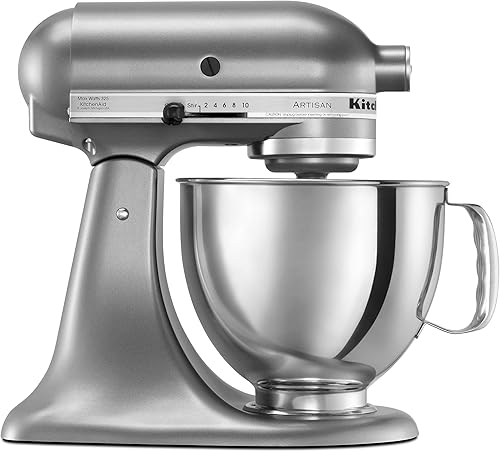 Best for mixing and whipping
KitchenAid Artisan 5-Qt Tilt-Head KSM150PS

Stand mixer vs food processor: what does each do best?
A stand mixer is built around mixing; a food processor is built around preparing ingredients. Their uses overlap in a few recipes, but their main tools serve different tasks.
The KitchenAid Artisan has a 5-quart bowl and 10-speed slide control, from very slow stirring to fast whipping. The Cuisinart food processor has a 14-cup work bowl, a chopping and mixing blade, and separate slicing and shredding discs.
That difference shapes the choice. A mixer is a natural fit for batter, whipped cream and dough, while a processor is suited to chopping, slicing, shredding, mincing and pureeing.
What jobs fit a stand mixer?
A stand mixer fits recipes where ingredients need to be combined, beaten, whipped or kneaded. Its controlled speeds and interchangeable mixing tools make it useful for many baking tasks.
The KitchenAid Artisan's 10 speeds range from a slow stir to a fast whip. Its 5-quart bowl gives you room for batches such as cookie dough or cake batter.
For a closer look at common mixer tasks, see what a stand mixer is used for. If bread is your main reason for buying one, compare stand mixers for homemade bread.
What jobs fit a food processor?
A food processor fits jobs that cut or break ingredients into smaller pieces. Depending on the blade or disc, that can mean chopping, slicing, shredding, dicing or pureeing.
The Cuisinart includes a stainless steel chopping and mixing blade, a 4 mm slicing disc and a shredding disc. Its 14-cup bowl is designed for larger quantities of food prep, and the shredding and slicing blades are not adjustable.
Which is better for baking and dough?
A stand mixer is the stronger fit for regular baking, while a food processor can help with some dough and prep tasks. Choose according to the steps your recipes ask you to do most often.
The Artisan has 10 speeds and is described for kneading, mixing and whipping. These are core mixer jobs, so it makes sense if your routine includes breads, cookies, cakes or whipped toppings.
The Cuisinart is also recommended for kneading, and its description includes dough. That can be useful if you want a processor that handles prep along with some dough work, but it won't take the place of a mixer for every baking task.
If homemade bread is the main goal, see our guide to stand mixers for bread. For dough-hook technique and speed guidance, start with how to use a stand mixer.
Can a food processor knead dough?
A food processor can knead some dough, but a stand mixer offers a more direct setup for repeated mixing and kneading. The Cuisinart is recommended for kneading, while the Artisan is made for mixing, whipping and kneading.
Think about dough size and frequency. If you make dough often and also bake cakes or whip cream, a mixer can cover more of your baking routine; if dough is occasional and you want a tool for vegetable prep, the processor may earn more counter space.
Which is better for vegetables and meal prep?
A food processor is the better choice for chopping, slicing and shredding vegetables. Those jobs use its blades and discs, while a stand mixer is mainly designed to combine ingredients.
The Cuisinart includes a chopping blade, slicing disc and shredding disc. Its large feed tube can take whole fruits and vegetables for slicing and shredding, though the blades are not adjustable.
The KitchenAid attachment offers dicing, slicing, shredding and julienne cuts. Its wide feed tube accommodates different food sizes, and an external lever adjusts slicing thickness from thick to thin.
The attachment needs a compatible KitchenAid stand mixer, while the Cuisinart is a separate appliance. If you want food prep without depending on a mixer, the Cuisinart is the more self-contained choice.
Should you choose an attachment or a separate processor?
Choose the attachment if you own a compatible KitchenAid mixer and want to save space; choose a separate processor if you want a self-contained prep appliance. Your existing equipment and storage space matter as much as the features.
The KitchenAid attachment connects to the mixer's power hub. It includes a slicing disc, shredding disc, julienne disc, dicing kit and storage case, with hand-wash care.
The Cuisinart stands alone and includes dishwasher-safe parts. Its 14-cup bowl suits larger prep batches, and the included recipe book offers another way to use it.
The attachment adds more parts to store and requires a KitchenAid mixer. The separate processor needs its own storage spot, but it can work without setting up a mixer first.
If you already own a KitchenAid, browse KitchenAid attachments for a stand mixer to see other ways to use its power hub. If you still need a mixer, our plain-English stand mixer guide covers the main buying choices.
How much capacity and storage do you need?
Choose bowl size around your usual batch and the space you can give the appliance. Capacity numbers aren't directly comparable because one is measured in quarts and the other in cups, and the machines do different jobs.
The Artisan's 5-quart bowl is sized for mixing tasks. The Cuisinart's 14-cup bowl is for food prep, such as chopping or shredding larger amounts.
Before buying, measure a cabinet or counter spot and check the height needed to access the bowl or feed tube. Also think about attachments and discs: the processor and its accessories need storage, while the KitchenAid attachment comes with a storage case.
A compact kitchen can make an attachment appealing if a KitchenAid mixer is already in your kitchen. If neither tool fits your routine or storage, wait until you can name the specific jobs that would justify it.
Which one is easier to clean?
The easier option depends on the parts you use and your preferred cleanup routine. The Cuisinart has dishwasher-safe parts, while the KitchenAid food processor attachment calls for hand washing.
For the Cuisinart, check its instructions for which parts can go in the dishwasher and how to handle the blades. The attachment's hand-wash care means you'll need to clean its discs and parts at the sink.
A stand mixer also has a bowl and mixing tools to clean after baking. Check the care instructions for the exact bowl and attachments you use, since care can vary by part.
How should you decide between a stand mixer and a food processor?
Pick a stand mixer if baking, whipping and kneading lead your weekly routine; pick a food processor if chopping, slicing and shredding come first. Choose the KitchenAid attachment when you already own a compatible mixer and want both types of jobs from one base.
The KitchenAid Artisan fits frequent baking with 10 speeds and a 5-quart bowl. The Cuisinart suits meal prep with a 14-cup bowl and included chopping, slicing and shredding tools.
For KitchenAid owners, the KSM2FPA attachment bridges the gap with dicing, slicing, shredding and julienne functions. Match the tool to your most common jobs, then use the stand mixer buying guide if mixing is still the priority.
For an independent reference on food processor safety and use, read the USDA's food safety guidance.
Frequently asked questions
Can a stand mixer replace a food processor?
A stand mixer can handle mixing, whipping and kneading, but it doesn't cover all the chopping, slicing and shredding jobs of a food processor. A compatible food processor attachment adds some of those prep tasks to a KitchenAid mixer, while a separate processor works on its own.
Can a food processor knead dough?
Some food processors can knead dough, including the Cuisinart 14-cup model described here. A stand mixer is the more direct fit if you also want a machine for mixing batters and whipping; consider your usual recipes before choosing.
Which appliance is better for chopping vegetables?
A food processor is the better fit for chopping vegetables because it is designed for prep tasks and includes a chopping blade. The KitchenAid attachment also dices, slices and juliennes, but it requires a compatible stand mixer.
Should I buy a food processor attachment or a separate food processor?
Choose the attachment if you already own a compatible KitchenAid mixer and want its dicing, slicing, shredding and julienne tools. Choose a separate processor if you want a 14-cup bowl and an appliance that doesn't depend on a mixer.