Types of Stand Mixers Explained
There are two main types of stand mixer: tilt-head and bowl-lift. Tilt-head models lift the top to reach the bowl and suit everyday baking; bowl-lift models raise the bowl to a fixed head and handle bigger, heavier batches.
On this page (10 sections)
- What are the main types of stand mixer?
- How does a tilt-head stand mixer work?
- How does a bowl-lift stand mixer work?
- What bowl size should each type have?
- How much wattage does each mixer type need?
- Which type suits bread and dough work?
- Which type is easier to use and clean?
- Which attachments change what a mixer type can do?
- How do you choose between the types?
- The bottom line on stand mixer types
The main types of stand mixer are tilt-head and bowl-lift, and the difference shapes how you load, scrape and knead. Tilt-head models lift the top to reach a bowl that stays on the base.
Bowl-lift models keep the head fixed and raise the bowl into it.
Most home bakers are best served by a tilt-head mixer in the 5-quart range. Pick a bowl-lift model when you knead large doughs or mix dense batches often.
The rest of this guide covers the designs, the capacity and wattage that go with each, and the attachments that change what a mixer can do.
What are the main types of stand mixer?
Two stand mixer designs dominate: tilt-head and bowl-lift. Each moves a different part of the machine, and that single choice affects how easy the mixer is to use and how much dough it handles well.
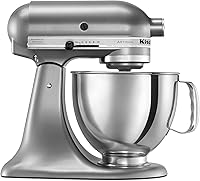
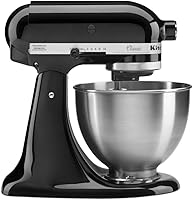
A tilt-head stand mixer has a hinged top. You release a latch and the head tilts back, lifting the beater or dough hook clear of the bowl.
The bowl sits on the base and stays there while you scrape it or add flour.
A bowl-lift stand mixer has a fixed head. A lever on the side raises the bowl up into the mixing position and lowers it for access.
The bowl locks onto two or three pins, which gives a steadier base for heavy mixtures.
There is also a third, less common style: the countertop or commercial mixer. These are bowl-lift designs built for steady daily use, often with a bigger bowl and an NSF certification for commercial kitchens.
They count as bowl-lift types but sit at the heavy-duty end.
The two main types cover nearly every home purchase. Tilt-head models are the classic counter appliance you picture when you think of a stand mixer.
Bowl-lift models look taller and more industrial, with the bowl cradled between two arms.
Neither type is newer or better in general. They solve the same job, mixing and kneading, with different mechanics.
Pick by how you bake, not by which looks more serious on the counter.
A tilt-head mixer is the easier first stand mixer for most people. A bowl-lift mixer earns its place when capacity and stability matter more than quick access.
Read on for how each type behaves in daily use.
How does a tilt-head stand mixer work?
A tilt-head mixer works by lifting its top away from a bowl that stays put. That open access is the design's main strength, and it is why tilt-head models are the common first choice for home bakers.
The head hinges at the back. A latch on the side releases it, then you push the head back until it rests at an angle.
The beater or hook comes up with the head, so the bowl mouth is clear.
That movement makes scraping simple. You can tilt the head, run a spatula around the bowl and add ingredients without removing anything.
Loading a second batch of flour is just as quick.
The bowl itself sits on a base plate and usually twists to lock. Because the bowl stays still, the head carries the motor and the gearing above it.
That puts the moving parts up top and leaves the bowl free.
The trade-off is balance. With a large, stiff dough in the bowl, a tilt-head design relies on the head's hinge and latch to hold position.
For everyday cakes, cookies and moderate bread batches this is fine. Very heavy doughs put more strain on that joint.
Tilt-head mixers also tend to be lighter and shorter than bowl-lift models, which helps in a small kitchen. A 5-quart tilt-head is the size most recipes are written around.
The beater reaches the bowl sides and bottom well in that size.
If you want the open-bowl access and a model that fits under upper cabinets, a tilt-head is the type to choose. Our guide to the best tilt-head stand mixers compares the leading models in that style.
How does a bowl-lift stand mixer work?
A bowl-lift mixer works by raising the bowl into a fixed head. The head never moves, so the machine can put more of its weight and motor behind the mixing action.
You fit the bowl onto the base pins and turn the side lever. That lifts the bowl up until the beater sits at the right depth.
To add ingredients or scrape, you lower the lever and the bowl drops away from the head.
This design is sturdier for dense mixtures. The bowl is held at two or three points, and the head is anchored to the frame above it.
Bread dough and heavy cookie batches feel more stable because the bowl cannot rock on a hinge.
The catch is access. The head stays in the way, so you work from the side of the bowl or lower it first.
Scraping and adding ingredients take a little more handling than with a tilt-head.
Bowl-lift mixers are usually taller and heavier. The 7-quart KitchenAid KSM70SKXX stands 16.5 in high and weighs 28 lb.
That height can rule out a spot under low cabinets. The bowl-lift design also tends to come with larger bowls and more powerful motors.
If you knead bread often or mix big batches for a family or a small business, the bowl-lift type is the natural fit. If counter height and quick access matter more, a tilt-head is easier to live with.
What bowl size should each type have?
Bowl size should follow your batch size, not the type alone. A tilt-head mixer in a small bowl and a bowl-lift mixer in a large bowl cover very different jobs, so match capacity to what you actually mix.
Small tilt-head mixers often come with a 3.5 to 5-quart bowl. That range suits cakes, cookies, frosting and moderate bread dough.
A 5-quart bowl is the sweet spot for most households.
Larger bowl-lift mixers run from about 6 to 8 quarts. The 7-quart KitchenAid KSM70SKXX is rated to mix 13 dozen cookies per batch or knead over 8.5 lb of bread.
An 8-quart model like the KitchenAid Commercial KSM8990 handles bigger batches again.
Think about the recipes you make most. A household that bakes a single cake at a time does not need an 8-quart bowl.
Someone who bakes for a bake sale or a big family will fill a large bowl more often than a small one.
Bowl size also affects the attachments and the footprint. A bigger bowl means a wider base and taller head clearance.
Measure your counter before choosing a large bowl-lift type.
A compact mixer is a third path for small kitchens. These are smaller tilt-head or hand-assist models with modest bowls.
See our roundup of the best compact stand mixers for small kitchens if space is the deciding factor.
How much wattage does each mixer type need?
For most home baking, a stand mixer with 300 to 500 watts covers cakes, cookies and standard bread dough. Wattage is a rough clue to how much load a mixer can handle, not a promise of better results.
A tilt-head mixer often runs in the 300 to 500-watt range. That is enough for creaming butter, whipping cream and kneading a single loaf's worth of dough.
The motor works harder as the dough stiffens.
Bowl-lift mixers often carry more power because they are built for larger, denser batches. The KitchenAid KSM70SKXX lists 500 watts.
The KitchenAid Commercial KSM8990 also lists 500 watts but pairs that with a high-efficiency DC motor and a 1.3 HP rating on the motor itself.
The wattage figure needs context. A mixer's motor control, gearing and bowl design all affect how well it kneads.
Two mixers with the same wattage can feel very different under a stiff dough.
Go higher when you knead bread several times a week or mix large batches. Stay in the mid range for cakes and cookies.
For a fuller explanation of the numbers and how to read them, see our guide to the right wattage for a stand mixer.
Which type suits bread and dough work?
Bowl-lift mixers are the better fit for regular bread and heavy dough. The fixed head and locked bowl give more stability when the dough pushes back against the hook.
Bread dough is stiff and gets stiffer as gluten develops. A bowl-lift design holds the bowl firmly at two or three points while the dough hook works.
That steady base is why larger bread batches go to bowl-lift models.
Tilt-head mixers can knead bread too. The KitchenAid Artisan 5-Qt KSM150PS is a tilt-head model with a dough hook and 10 speeds.
It handles standard dough well. Very large or very stiff doughs put more strain on the head hinge over time.
Capacity matters as much as design. The 7-quart KitchenAid KSM70SKXX is rated to knead over 8.5 lb of bread, which suits big weekly bakes.
A 5-quart tilt-head is better for smaller batches.
If bread is your main use, choose a bowl-lift type with a dough hook and enough capacity for your usual loaf count. If bread is occasional and cakes are the main event, a tilt-head is the easier all-rounder.
Which type is easier to use and clean?
A tilt-head mixer is easier for daily loading, scraping and cleaning. The bowl stays in place and the head lifts away, so there is less fiddling between steps.
With a tilt-head, you tilt the head, add ingredients and lower it again. Scraping the bowl is quick because the bowl does not move.
Cleaning is also simple, since the bowl lifts out and the head tilts clear of the base.
A bowl-lift mixer needs more handling. You lower the bowl to add ingredients and raise it again to mix.
The head stays in place, so you work around it when scraping.
That extra handling is not a problem for large batches, where you load once and mix long. It is more noticeable when you add ingredients in several stages.
For frosting or a delicate batter, the tilt-head's open access is friendlier.
Weight matters too. A tilt-head mixer like the Artisan weighs about 10,000 g (roughly 22 lb), while the 7-quart bowl-lift is 28 lb and the 8-quart commercial model is 25 lb.
Heavier machines are harder to move for cleaning but sit more firmly in use.
If you will use the mixer daily for small batches, the tilt-head type saves effort. If you mix big batches weekly, the bowl-lift type's stability is worth the extra handling.
Which attachments change what a mixer type can do?
Attachments turn a stand mixer into a pasta maker, grinder, shredder and more, but fit depends on the type and model. The hub at the front takes powered add-ons, and the bowl size and head design set what works.
The KitchenAid Artisan 5-Qt tilt-head model has a hub that takes over 10 optional attachments, from food grinders to pasta makers. That expands a single appliance into a small kitchen workhorse.
The attachments are sold separately.
Bowl-lift models also take hub attachments. The 7-quart KSM70SKXX includes a double flex edge beater, a coated flat beater, a coated dough hook and an 11-wire whip.
The 8-quart Commercial KSM8990 includes a stainless steel flat beater, a spiral dough hook and an 11-wire elliptical whip.
Check the hub and the model before buying an add-on. Attachments are built for a brand and often a bowl size or head design.
A grinder made for one mixer may not fit another type.
For the base mixing job, the included beater, hook and whip do most of the work. The flat beater creams and mixes, the dough hook kneads and the wire whip aerates.
Choose a mixer that includes the tools you need rather than buying them later.
How do you choose between the types?
Pick a tilt-head mixer for everyday baking and a bowl-lift mixer for large or heavy batches. The type should follow your usual recipes, your counter space and how often you knead.
Start with your most common bakes. Cakes, cookies, frosting and a loaf now and then suit a 5-quart tilt-head.
Big bread batches, bulk cookie dough or frequent large-batch cooking point to a bowl-lift.
Then check your space. A tilt-head is shorter and easier to tuck under cabinets.
A bowl-lift needs headroom for the lever and the bowl lift, so measure the counter and the cabinets above.
Next, think about access. If you scrape and add ingredients often, the tilt-head's open bowl wins.
If you load once and mix long, the bowl-lift's stability wins.
Finally, weigh the mixer itself. A heavier bowl-lift model stays put but is harder to move.
A lighter tilt-head is easier to shift for cleaning. Check the weight before you buy; our guide to how much a stand mixer weighs covers typical figures.
Here are three models that cover the main needs. Our score weighs specs, features and buyer feedback against what you're shopping for.
The bottom line on stand mixer types
The types of stand mixer come down to two designs. A tilt-head mixer lifts its top for quick access and suits most home bakers.
A bowl-lift mixer locks the bowl into a fixed head for stability and handles larger, heavier batches.
Pick a tilt-head if you bake cakes and cookies often and want an easy, compact mixer. Pick a bowl-lift if bread, big batches or steady daily mixing are your priority.
For most kitchens, a 5-quart tilt-head is the first mixer to consider, with a bowl-lift as the step up when capacity and stability matter more.
Frequently asked questions
Is a tilt-head or bowl-lift stand mixer better?
A tilt-head mixer is better for most home bakers because the bowl stays put and you can scrape and add ingredients easily. A bowl-lift mixer is better for large or dense batches, since the bowl locks into a fixed head with more stability.
How many watts should a stand mixer have?
For most home baking, 300 to 500 watts is enough for doughs and batters. Go higher for frequent bread kneading or large batches, and remember wattage is only one clue to how a mixer handles load.
Can a tilt-head mixer knead bread dough?
Yes. A tilt-head mixer with a dough hook can knead standard bread dough, though heavy or very large batches put more strain on the head.
For frequent big loaves, a bowl-lift design with more capacity is the safer fit.
What is the difference between a stand mixer and a hand mixer?
A stand mixer sits on the counter and leaves both hands free while it works. A hand mixer is lighter and cheaper but needs you to hold it and move it through the bowl, so it tires your arm during long mixing or kneading.
Do stand mixer attachments fit every type?
No. Attachments are made for a specific brand and often a specific bowl size or head design.
Check the hub and model before buying a grinder, pasta maker or other add-on for your mixer.