Bread Machine vs Stand Mixer for Homemade Bread: Which Is Better? (October 2026)
Choose a bread machine for an automated loaf, or a stand mixer for dough you shape and bake yourself. The right choice depends on how much control you want over each step.
On this page (6 sections)
Choose a bread machine for an automated loaf, or a stand mixer for dough you shape and bake yourself. The bread machine vs stand mixer choice comes down to whether you want one appliance to run the whole bread cycle or prefer control over dough and oven baking.
The Cuisinart Compact Bread Maker has programs that knead, rise, and bake bread in its pan. A stand mixer such as the Bosch Universal Plus kneads dough, but you handle shaping and baking separately.
For more on stand mixer dough options, see our guide to stand mixers for homemade bread. If your baking includes sourdough, read whether you can mix sourdough in a stand mixer.


Bread machine vs stand mixer: which does more of the work?
A bread machine can take dough from ingredients to baked loaf; a stand mixer handles mixing and kneading. That difference affects your schedule, workspace, and control over the finished bread.
The Cuisinart has 12 programs, including white, French, whole wheat, sweet, and gluten-free bread. It also has Dough and Artisan Dough programs for dough you plan to bake separately.
With a stand mixer, you add ingredients to the bowl, mix and knead with an appropriate tool, then move the dough through its rises and bake. You get more say in the loaf shape and baking surface, but you also take on those steps.
What does a bread machine automate?
A bread machine combines a pan, kneading paddle, and programmed cycle. For the Cuisinart, bread programs cover kneading, rising, and baking, with selectable loaf sizes of 1, 1.5, or 2 lb and 3 crust shades.
Its 13-hour delay start lets you schedule a cycle ahead, and a 60-minute keep-warm function holds the finished loaf. An alert can also signal when to remove the kneading paddle before the final rise.
The tradeoff is a loaf baked in the machine's vertical pan, with less freedom to shape it as a boule, batard, or rolls.
What does a stand mixer do for bread dough?
A stand mixer gives you a bowl for combining and kneading ingredients, but it doesn't complete the bread cycle. You decide how to ferment, shape, proof, and bake the dough.
The Bosch Universal Plus includes a dough hook and extender, plus a 6.5-quart bowl. Its manufacturer describes a capacity of up to 14 loaves of whole grain bread dough; match any large-batch claim to your recipe and the instructions for the exact mixer.
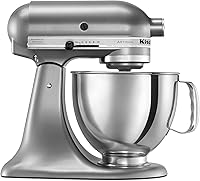
The KitchenAid Artisan has 10 speeds and a tilt-head design. Its listed included component is the mixer itself, so check that the dough hook you need is included or available before planning bread around it.
Our guide to how long to knead dough in a stand mixer explains why dough texture and recipe cues matter alongside the clock.
Which one gives you more control over the loaf?
A stand mixer gives you more control over shaping and oven baking; a bread machine gives you set programs and loaf-size choices. Pick based on the bread you want to make most often.
A bread machine is convenient for consistent sandwich loaves. The Cuisinart offers 3 loaf sizes and crust shades, but the bread bakes in its vertical pan.
A stand mixer lets you turn dough out, shape it by hand, and choose a separate pan or baking surface. That can be useful for recipes with a specific shape or crust, but it adds work and requires room for the extra steps.
Can you make artisan-style bread in either machine?
Both can help with artisan-style bread, but the stand mixer leaves more of the process in your hands. The Cuisinart includes an Artisan Dough program, while the Bosch can knead dough that you shape and bake separately.
An automatic cycle may be convenient for a recipe that suits its timing and pan. Fermentation can vary with starter activity, flour, and room temperature, so a fixed program may not match every dough.
A stand mixer can help combine and knead dough, but it won't judge when fermentation is complete. Follow the recipe's dough cues, then shape and bake as directed.
If you are choosing a dough tool, our comparison of spiral dough hooks and C-hooks covers how hook shape may affect the mixing setup.
Does the machine decide the bread's crust?
The bread machine offers direct crust-shade settings for its bake cycle. The Cuisinart has light, medium, and dark choices.
With a stand mixer, the oven and baking method determine the crust. You can choose a loaf pan, baking stone, or another suitable setup based on the recipe, then adjust the bake yourself.
That flexibility is useful if you enjoy refining a recipe. It also means the mixer cannot promise a particular crust without your attention to oven temperature, timing, and dough size.
Which is easier to fit into a busy routine?
A bread machine asks for less attention during the cycle; a stand mixer asks you to manage the dough after kneading. Think about when you can be in the kitchen, not just how long a recipe takes.
The Cuisinart can be loaded and started in advance, and its delay start may fit an overnight or daytime schedule. A stand mixer can shorten the effort of kneading, but rising and baking still need planning.
A machine's programmed cycle is not always the fastest way to get bread. The overall time depends on the recipe and rise schedule, so compare the process you actually plan to follow.
When does the delay timer help?
The delay timer helps when you want to set up ingredients ahead of a scheduled bread cycle. The Cuisinart offers up to 13 hours, along with a keep-warm period after baking.
Use ingredients and recipes that are suitable for delayed mixing, and follow the manufacturer's instructions. Perishable ingredients may need different handling than flour, water, and yeast.
A stand mixer has no automatic delay cycle in the details here. You can still prepare ingredients in advance, but you'll need to start and monitor each stage yourself.
How much cleanup should you expect?
A bread machine concentrates the work in its removable pan; a stand mixer leaves you with a bowl, tool, and separate baking equipment. The exact cleanup depends on your recipe and how many extra bowls you use.
The Cuisinart's pan is non-stick and the machine includes one kneading paddle. Its care instructions say hand wash, so plan to clean the pan and paddle after use.
The Bosch bowl is dishwasher safe and has a removable drive shaft for cleaning. A stand mixer still means cleaning the bowl and dough hook, plus the baking pan or surface used afterward.
Which machine makes sense for your kitchen?
Choose by countertop space, storage, and what else you want the appliance to do. A bread machine is specialized around bread cycles, while a stand mixer can support a broader baking routine.
The Cuisinart measures 10.25 in deep, 13.25 in wide, and 11.25 in high. The Bosch is 11 in deep, 12 in wide, and 15 in high; the KitchenAid Artisan is 14.1 in deep, 8.7 in wide, and 13.9 in high.
Measure where you plan to use and store the appliance, including room to load ingredients and remove the loaf or bowl. If a stand mixer will stay on the counter, consider how often you'll use it for more than bread.
Can a stand mixer replace a bread machine?
A stand mixer can replace the kneading step, but it won't replace a bread machine's automated rising and baking cycle. Choose it as a replacement only if you are comfortable handling those stages yourself.
The KitchenAid Artisan can cover mixing and whipping jobs beyond bread, and optional hub-powered attachments expand its uses. Its dough tool needs to be available separately or included in the setup you choose.
The Bosch includes wire whips and a dough hook, and its bowl supports large mixing jobs. For a wider comparison of mixer types, see stand mixer vs food processor.
Is a bread machine useful if you already own a mixer?
A bread machine can still make sense if you value a hands-off bake or scheduled loaf. The two appliances serve different parts of the process, so owning a mixer doesn't automatically make the machine redundant.
Use the mixer when you want to shape dough or bake several forms from one batch. Use a bread machine when a programmed loaf or dough cycle fits the recipe and your schedule.
If you are still choosing a mixer, our stand mixer buying guide explains the main styles and features. It can help you decide whether a mixer earns space beyond bread making.
Which should you choose for homemade bread?
Your usual loaf and available kitchen time should settle the choice.
The Cuisinart is the simpler route to a loaf cycle, with 3 loaf sizes, 3 crust shades, and a delay start. The Bosch suits larger dough batches with its 6.5-quart bowl and included dough hook, while the KitchenAid Artisan offers 10 speeds for varied kitchen mixing.
For a focused look at mixer choices for bread, read our stand mixer picks for homemade bread. If you want an appliance to finish the loaf while you do something else, choose the bread machine.
Product picks for bread making
Frequently asked questions
Is a bread machine better than a stand mixer for bread?
A bread machine is better when you want one appliance to knead, rise, and bake a loaf. A stand mixer is better when you want to control shaping and oven baking, or use the machine for other mixing jobs.
The better fit depends on how much of the process you want automated.
Can a stand mixer bake bread?
No. A stand mixer mixes and kneads dough, but you shape and bake the loaf separately.
A bread machine can handle kneading, rising, and baking in its pan, though some models also offer dough-only programs for oven baking.
Can you use a bread machine just to make dough?
Yes. The Cuisinart CBK-110 has Dough and Artisan Dough programs that prepare dough for a separate baking step.
Check the selected cycle and recipe instructions, then shape and bake the dough in an appropriate pan or on a baking surface.
Which is better for sourdough, a bread machine or stand mixer?
A stand mixer gives you more direct control over mixing and dough handling, while a bread machine can simplify set cycles if its program suits your recipe. Sourdough timing varies with starter activity and room conditions, so monitor the dough instead of relying on a fixed cycle alone.
Can one stand mixer handle bread and other baking?
Yes. A stand mixer can knead dough and handle other mixing or whipping tasks with suitable tools.
The KitchenAid Artisan has 10 speeds and optional hub-powered attachments, while the Bosch includes wire whips and a dough hook.
Check each recipe's batch size against the model's guidance.