Do You Need a Stand Mixer to Make Bread?
No, you don't need a stand mixer to make bread. Hand kneading, a bread machine or a no-knead method all get you a loaf. A stand mixer only earns its counter space if you bake often or work with stiff, whole-grain dough.
On this page (9 sections)
- Do you need a stand mixer to make bread, or can you knead by hand?
- When does a stand mixer actually earn its counter space?
- Can you make sourdough bread without a mixer?
- How much time does a stand mixer save on a loaf?
- What should you look for in a mixer for bread dough?
- Which stand mixers handle bread dough best?
- Is a bread machine a better choice than a stand mixer?
- How do you knead bread dough in a mixer without overworking it?
- So, should you buy a stand mixer for bread?
No, you don't need a stand mixer to make bread. Two bowls and your hands are enough for a basic loaf, and a bread machine or a no-knead recipe needs even less work.
A mixer only pays off if you bake regularly or handle stiff, whole-grain dough that's hard to knead by hand.
That's the short answer to "do you need a stand mixer to make bread." The rest of this guide covers when the machine actually helps, when it just takes up counter space, and which mixers handle dough well when you do decide to buy one.
Do you need a stand mixer to make bread, or can you knead by hand?
You can knead by hand and get a great loaf. A stand mixer is a convenience, not a requirement.
Flour, water, salt and yeast, plus 8 to 12 minutes of kneading on a floured counter, make a dough that rises and bakes like any machine-made loaf.
Hand kneading has real advantages. You feel when the dough turns from shaggy and sticky to smooth and elastic, which teaches you what gluten development should feel like.
There's nothing to store, nothing to plug in, and no bowl to scrub afterward.
The trade-off is time and effort. A wet dough like ciabatta is messy on a counter, and a stiff whole-grain dough can take 15 minutes or more by hand.
If you bake once a month, that's a fair exchange. If you bake twice a week for a family, the mixer starts to look less like a luxury.
When does a stand mixer actually earn its counter space?
A mixer earns its spot when you bake often, make large batches or knead heavy dough. It takes over the part of bread making that tires people out, so you can spend your time on shaping and baking instead.
Frequency is the first test. Someone baking two or three loaves a week will run a mixer hard enough to justify it.
A once-a-month baker can knead by hand without noticing the extra minutes.
Batch size is the second. A dough with 1,000 g of flour is hard to knead by hand without a long counter and strong arms.
A mixer with a dough hook handles it in one bowl, which matters if you're feeding a household or baking for the freezer.
Dough type is the third. Whole-grain rye and stiff bagel doughs fight back, and a machine rated for bread takes that load more comfortably than your wrists.
If your recipes lean that way, a mixer is the more pleasant tool.
Can you make sourdough bread without a mixer?
Yes, sourdough works well without a mixer, and many bakers prefer it that way. Sourdough relies on stretch and folds over time rather than a long knead, so a bowl, a scraper and a pair of hands do most of the work.
The typical routine is simple. Mix the flour and water, wait, add the starter and salt, then do a few sets of stretch and folds during bulk fermentation.
Each set takes under a minute and builds strength without a machine.
A mixer does speed up the initial mix and can handle large sourdough batches. It also lets you knead a stiff levain dough that would be hard by hand.
If you want the detail, see whether you can mix sourdough in a mixer and what changes when you do.
How much time does a stand mixer save on a loaf?
A mixer saves roughly 5 to 10 minutes per loaf in kneading time, plus the cleanup you avoid on a floured counter. That's the honest number, not a dramatic one.
The real saving comes from multitasking. While the dough hook works, you can oil bowls, line tins or start the next batch.
On a busy weekend that's worth more than the raw minutes suggest.
The cost is a heavier clean-up. A mixer bowl, dough hook and splash guard all need washing, and dough creeps up the hook on stiff batches.
Weigh that against a single bowl and your hands before you decide the mixer wins.
What should you look for in a mixer for bread dough?
Look for a dough hook, a bowl that matches your usual batch and a motor with enough torque for stiff dough. Those three things decide whether a mixer handles bread well or struggles and overheats.
The dough hook is the main one. A hook kneads by stretching and folding, while a flat beater is for cake batter and a whisk is for cream and egg whites.
A mixer that ships with all three covers more recipes, but the hook is the one bread depends on.
Bowl size is the second. A batch of 1,000 g of flour needs room to rise in the bowl or a second bowl.
Our guide to how big of a stand mixer you need walks through the math so you don't end up with a bowl that's too small or too large.
Torque is the third. Dough is dense, and a mixer that's built for whipping cream may slow or strain on a stiff batch.
A model sold for bread or with a strong motor and metal gearing is the safer long-term choice.
Which stand mixers handle bread dough best?
The KitchenAid Artisan 5-Qt is the best all-round pick for most home bakers, with the Bosch Universal Plus close behind for whole-grain batches and the Ooni Halo Pro for pizza-style dough. Each one brings something different to a loaf.
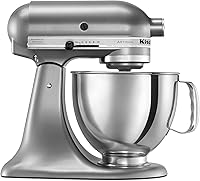
The Artisan is the mixer most people picture when they think of a stand mixer. Its 5-quart bowl suits standard two-loaf batches, and the 10-speed slide control runs from a very slow stir to a fast whip.
The tilt-head design makes it easy to add flour or scrape the bowl mid-mix, and a pouring shield helps keep dust down. It ships with a dough hook, flat beater and wire whip, so bread, cake and whipped cream are all covered.
It's a general-purpose machine rather than a bread specialist, but for most households it's the simplest place to start. For more options, compare the stand mixers we rate for bread.
The Bosch Universal Plus is built for volume. Its 6.5-quart bowl and bottom-drive motor give it the torque for dense dough, and the maker rates it for up to 14 one-pound loaves of whole-grain bread in a single batch.
The bowl is lightweight plastic, dishwasher safe, with a removable drive shaft for cleaning. It comes as a bundle with wire whips, a dough hook and the NutriMill dough hook extender.
The bottom drive keeps the power under the bowl, which keeps the unit compact and easy to store. It's the pick for big families and whole-grain bakers, though its batch size makes it more machine than a casual baker needs.
The Ooni Halo Pro uses spiral mixing technology, with a rotating bowl, a spiral dough hook and a removable breaker bar. Those parts work the dough to build a stronger gluten network, which matters for high-hydration pizza and bread.
It has 58 speed settings from 60 RPM up to over 1,000, plus a time setting function. Four attachments come in the box: a breaker bar, flexible beater, spiral dough hook and geared whisk.
The stainless steel bowl holds 7.3 quarts. It's the pick if pizza and open-crumb bread are your goals and you want to learn a spiral workflow.
It's a heavier, more specialized machine than the Artisan.
Is a bread machine a better choice than a stand mixer?
For hands-off loaves, a bread machine is the easier buy; for oven-baked crust and shaped breads, a mixer wins. The two machines solve different problems.
A bread machine mixes, kneads, proofs and bakes in one tub. You add ingredients, press a button and come back to a loaf.
That's ideal for a busy weekday, but the loaf bakes in a vertical pan, so the crust and shape are limited.
A stand mixer stops at the kneading stage. You shape the dough, proof it and bake it in your own oven or Dutch oven.
That's more work and more control: you get free-form boules, baguettes, pizza and sandwich loaves. Our comparison of bread machine vs stand mixer lays out the time and counter-space differences in detail.
If you want bread with minimal effort and don't care about crust, buy the bread machine. If you want bakery-style loaves, buy the mixer and learn to shape.
How do you knead bread dough in a mixer without overworking it?
Use the dough hook on the lowest speed and stop when the dough pulls clean from the bowl. Most doughs need 4 to 8 minutes on low, and checking early beats guessing.
Start with the dry ingredients and most of the water. Mix on the lowest setting until a shaggy dough forms, then add the rest of the water slowly.
Let the hook knead on low for 4 minutes, then check.
The dough is ready when it comes away from the bowl sides and stretches thin without tearing. If it's still sticky and slack, give it another minute.
On a warm day, cut the time short and finish by hand.
Skip the medium and high speeds for bread. High speed heats the dough and can overwork the gluten.
Save those settings for whipped cream and cake batter.
So, should you buy a stand mixer for bread?
Buy one only if you bake often, make large batches or knead heavy whole-grain dough. Otherwise, knead by hand or let a bread machine do the work.
The honest answer to "do you need a stand mixer to make bread" is that most beginners don't, and a mixer won't make a bad recipe good.
When you do buy, match the machine to your baking. Pick the KitchenAid Artisan for all-round use, the Bosch Universal Plus for whole-grain volume and the Ooni Halo Pro for pizza and high-hydration dough.
If you're still weighing the alternatives, read bread machine vs stand mixer before you spend.
If sourdough is your goal, our guide to mixing sourdough in a mixer explains what a machine changes. And if you're unsure about bowl size, start with how big of a stand mixer you need so the first loaf isn't the last one that fits.
Frequently asked questions
Can you make bread without any mixer at all?
Yes. A bowl, your hands and a few minutes of kneading handle a standard loaf, and no-knead recipes skip kneading entirely.
You only need flour, water, salt and yeast or sourdough starter, plus a surface to work on.
How long does hand kneading take compared with a mixer?
Hand kneading usually takes 8 to 12 minutes for a basic white dough. A stand mixer with a dough hook gets there in about 4 to 8 minutes on a low setting.
Whole-grain doughs need longer either way because the bran slows gluten development.
Can you overwork bread dough in a stand mixer?
Yes. Leaving a dough on medium speed too long can over-oxygenate it and make the gluten slack and sticky.
Stop when the dough pulls cleanly from the bowl and stretches thin without tearing, and check it earlier on a warm day.