How to Make Mashed Potatoes With a Mixer
To make mashed potatoes with a mixer, cook peeled potato chunks until tender, drain them well, then mix gently with warm butter and milk. Stop as soon as they’re smooth to help avoid a gluey texture.
On this page (10 sections)
- What’s the easiest way to make mashed potatoes with a mixer?
- Which potatoes work well for mashed potatoes?
- Which mixer attachment should you use?
- How do you avoid gluey mashed potatoes?
- Can a hand mixer make mashed potatoes?
- How much milk and butter should you add?
- What can you mix into mashed potatoes?
- What should you do if the potatoes are lumpy or too thick?
- What is the simplest way to choose a mixer for mashed potatoes?
- How do you make mashed potatoes with a mixer without overworking them?
To make mashed potatoes with a mixer, cook peeled potato chunks until tender, drain them well, then mix gently with warm butter and milk. Start on low speed and stop as soon as the potatoes are smooth, since overmixing can make them gluey.
Cut the potatoes into similar-sized chunks so they cook at about the same rate. For a basic batch, use potatoes, salt, butter, and milk or cream, adjusting the amounts to taste.
What’s the easiest way to make mashed potatoes with a mixer?
Boil the potato chunks until they break easily with a fork, then drain and mix them on low. Add warm butter and milk in small amounts so you can control the texture.
- Peel the potatoes if you want a smooth mash, then cut them into even chunks.
- Put them in a pot and cover with cold water. Add salt.
- Bring the water to a boil, then simmer until a fork slides into the chunks easily.
- Drain thoroughly and return the potatoes to the hot pot for a minute or two.
- Transfer them to a mixer bowl, add butter, and mix on low.
- Pour in warm milk gradually, stopping when the mash is as soft as you like.
Drying the potatoes briefly after draining helps keep excess water from thinning the mash. Keep the mixer speed low and watch the bowl as you add liquid.
Which potatoes work well for mashed potatoes?
Choose starchy or all-purpose potatoes for a soft, fluffy mash. Yukon Gold potatoes tend to make a creamier mash, while russets can turn light when cooked and mixed gently.
Waxy potatoes can hold their shape well, but they may need more care to mash smoothly. If using them, cook until very tender and avoid mixing longer just to chase every small lump.
Peeling is optional if you like a more rustic texture. For a smooth result, peel before cooking or remove any loose skins after the potatoes are cooked.
Which mixer attachment should you use?
Use the flat beater for a stand mixer, or the standard beaters on a hand mixer. Avoid a whisk for the main mashing step because it can incorporate more air and encourage overmixing.
Can a stand mixer mash potatoes?
A stand mixer works well when you have enough potatoes to justify bringing it out. Fit the bowl securely, add the drained potatoes, and mix on the lowest setting before adding warm dairy.
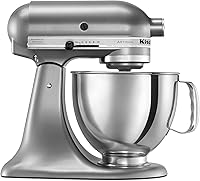
The KitchenAid Artisan has a 5-quart bowl and 10 speed settings, including a slow stir setting. Its flat beater is the usual attachment for this job.
Do you need a special beater?
No special beater is required to make mashed potatoes. A standard flat beater is enough, though a flexible edge beater can scrape ingredients from the bowl while mixing.
The KitchenAid Flex Edge Beater is made for select 4.5- and 5-quart KitchenAid tilt-head mixers. Check your mixer model before choosing an attachment, since it does not fit every stand mixer.
See our guide to KitchenAid attachments for other tools that fit specific mixing jobs.
How do you avoid gluey mashed potatoes?
Use low speed and stop mixing as soon as the potatoes are smooth. Too much mixing can break down the starch and leave the mash sticky or stretchy.
Drain the potatoes well before mixing, since leftover water can make them loose. Add warm milk gradually instead of pouring in a large amount at once.
If you see a few small lumps, finish by folding the potatoes with a spoon or spatula. Don't keep running the mixer at high speed to force a perfectly uniform texture.
Can a hand mixer make mashed potatoes?
Yes, a hand mixer can make mashed potatoes in a deep, sturdy bowl. Start with the beaters partly submerged in the potatoes, then use low speed to reduce splashes.
A hand mixer can be convenient for a smaller batch or when you don't want to set up a stand mixer. KitchenAid’s 5-speed hand mixer includes two stainless steel turbo beaters and has a speed range for gentle mixing through whipping.
Hamilton Beach’s 6-speed hand mixer includes two beaters, a whisk, and a snap-on storage case. Its bowl rest can steady the mixer on the edge of a bowl between additions.
For speed and tool basics across different jobs, see how to use a stand mixer.
How much milk and butter should you add?
Start with a modest amount of warm butter and milk, then add more to taste. The right amount depends on how many potatoes you cooked and how soft you want the mash.
Add butter first so it coats the hot potatoes, then pour in milk a little at a time. Cream, sour cream, or cooking water can also be used to adjust richness and texture.
Season with salt and taste before serving. If the potatoes become too loose, let them sit briefly in the warm pot so some moisture can evaporate.
What can you mix into mashed potatoes?
Fold in extras after the potatoes are mashed, or add sturdy ingredients on the lowest speed. This keeps the additions distinct and helps prevent overworking the potatoes.
Chopped herbs, grated cheese, roasted garlic, or cooked bacon can add flavor. Add small amounts first, taste, then adjust the seasoning.
For chunky additions, use a spoon or spatula rather than the mixer. This gives you more control over the final texture.
What should you do if the potatoes are lumpy or too thick?
For lumpy potatoes, add a splash of warm milk and mix briefly on low. Stop as soon as the larger pieces break down.
If the mash is too thick, loosen it with warm milk or cream, one small pour at a time. If it is too thin, keep it warm in the pot and stir gently while some moisture cooks off.
Avoid using a blender or food processor to rescue the texture. Their blades can work the potato starch quickly and make the result pasty.
What is the simplest way to choose a mixer for mashed potatoes?
For a small batch, a hand mixer with standard beaters is easy to bring out and put away. For a larger bowl, a stand mixer offers a stable bowl and low speed control.
If you already own a stand mixer, start with its flat beater before buying another attachment. The best stand mixer buying guide can help if you’re choosing a mixer for several kitchen jobs.
The key is the same with either mixer: drain the potatoes, add warm liquid slowly, mix on low, and stop early. If you want to see other everyday mixer uses, visit what a stand mixer is used for.
How do you make mashed potatoes with a mixer without overworking them?
When deciding how to make mashed potatoes with a mixer, use low speed and let the potatoes’ tenderness do most of the work. Add warm dairy gradually and stop while the mash is still slightly looser than you want, since it thickens as it sits.
Choose a hand mixer for a modest batch or a stand mixer for a larger one. Use the beater already made for your mixer, and check attachment fit before adding a separate one to your kitchen.
The best texture comes from short mixing, not more power. Serve promptly, or keep the mash warm in a covered pot.
Frequently asked questions
Can you make mashed potatoes in a stand mixer?
Yes. Use the flat beater on low speed after the cooked potatoes are drained and briefly dried in the hot pot.
Add warm butter and milk in small amounts, then stop once the potatoes are smooth.
Avoid high speed and prolonged mixing, which can make them gummy.
Which mixer attachment is best for mashed potatoes?
A standard flat beater is a good choice for mashed potatoes because it breaks up cooked chunks without whipping in as much air as a whisk. Start on low speed and stop when the texture is right.
A hand mixer’s beaters can also work in a deep bowl.
Why did my mashed potatoes turn gluey in the mixer?
Potatoes can turn gluey when their starch is worked too much, especially with a high powered mixer or too much mixing. Use low speed, add liquid gradually, and stop as soon as the lumps are gone.
If needed, fold in a little warm milk by hand.
Should milk be warm for mashed potatoes?
Warm milk blends into hot potatoes more easily than cold milk and helps keep the mash warm. Heat it gently, without boiling, and add only a little at a time until the potatoes reach the texture you like.
Warm butter can be added with it.