KitchenAid Artisan vs Classic: Which Mixer to Buy? (November 2026)
Buy the KitchenAid Artisan for most kitchens, because its 5-quart bowl and pouring shield handle bigger batches with less mess. Pick the Classic only if you bake in smaller amounts and want the lower-tier tilt-head model.
On this page (8 sections)
- Artisan vs Classic: the quick side-by-side answer
- What do you get in the box with each mixer?
- How much does bowl size change your baking?
- Which mixer fits your counter and cupboard?
- How do the colors and finishes compare?
- Do both mixers take the same attachments?
- Which mixer is right for your kitchen?
- Which mixer wins on value?
Buy the KitchenAid Artisan for most kitchens, because its 5-quart bowl and pouring shield handle bigger batches with less mess. Pick the Classic only if you bake in smaller amounts and want the simpler tilt-head model.
The kitchenaid artisan vs classic question comes down to bowl size and what's in the box. Both mixers share the same 10 speeds, the same tilt-head design and the same metal build, so the gap is smaller than the price step suggests.
This comparison looks at what each mixer includes, who each one suits and where the extra money goes.


Artisan vs Classic: the quick side-by-side answer
The Artisan is the better mixer for most people, because the bigger bowl and included pouring shield make daily baking easier. The Classic is a solid small-batch mixer that covers the basics for less.
KitchenAid sells both as tilt-head stand mixers with 10 speeds. The difference starts with the bowl: 5 quarts on the Artisan against 4.5 quarts on the Classic.
The Artisan also adds a handled bowl and a pouring shield. The Classic includes the three core mixing attachments but not the shield, and it comes in one finish.
The table below sets the two models next to each other on the points that change the buying decision.
| Product | Best for | Capacity | Speeds | Bowl | Our score |
|---|---|---|---|---|---|
| KitchenAid Artisan | most bakers | 5 quarts | 10 | Stainless steel, handled | 9.5 |
| KitchenAid Classic 4.5-Qt K45SS | small batches | 4.5 quarts | 10 | Stainless steel | 8.5 |
What do you get in the box with each mixer?
The Artisan includes a pouring shield on top of the three mixing tools; the Classic stops at the bowl and the beater, dough hook and whip. That shield is the practical extra most bakers notice first.
Both mixers ship with a coated flat beater, a coated dough hook and a 6-wire whip. Those three cover creaming butter, kneading dough and whipping cream.
The Artisan adds a 5-quart stainless steel bowl with a handle and a pouring shield. The Classic's 4.5-quart stainless steel bowl has no handle, and no shield comes with it.
KitchenAid lists the Artisan's five included components as the bowl, flat beater, dough hook, wire whip and pouring shield. The Classic's box holds four items: the bowl and the same three mixing tools.
The bowls on both models are dishwasher safe. That matters on flour-heavy days, when the bowl is the piece that takes the longest to clean by hand.
Why the pouring shield matters more than it sounds
A shield sits over the bowl rim and lets you add flour or liquid through a chute. It cuts the cloud of flour that rises when you start the mixer on a low speed.
Without a shield, you add ingredients more slowly or cover the bowl yourself. That's workable, just messier, especially with fine flour and cocoa.
The Classic can take a shield bought as a separate accessory. Check that it fits the bowl before ordering, since not every shield suits every model.
How the bowl handle changes the routine
The Artisan's bowl has a comfortable handle; the Classic's does not. A handle sounds minor until you lift a full bowl of stiff cookie dough.
A 5-quart bowl at capacity is heavy. The handle gives you a firm grip when you move the bowl from the mixer stand to the counter or the sink.
The Classic's bowl is lighter and smaller, so lifting it with two hands is less of a chore. If you empty the bowl where it sits, the missing handle matters less.
How much does bowl size change your baking?
The 5-quart Artisan bowl mixes up to 9 dozen cookies in one batch, while the 4.5-quart Classic tops out at 8 dozen. That extra dozen is the clearest everyday difference between the two.
KitchenAid's figures assume the flat beater and 28g of dough per cookie. In practice, the bowl size decides whether a double batch fits in one go or needs splitting.
For a household that bakes weekly, the larger bowl saves a second round of mixing. For occasional small batches, the Classic's bowl is plenty.
When the bigger bowl earns its place
Choose the Artisan if you often double a recipe for a crowd, a bake sale or a freezer stash. The 5-quart bowl and handle make a full batch easier to lift and pour.
The larger bowl also gives more room when you add dry ingredients to a wet mix. A full bowl has less headroom, so the extra capacity keeps the mixer from overflowing during the final stir.
When the smaller bowl is enough
The Classic suits singles and couples who bake one tray of cookies or a single cake at a time. Its 4.5-quart bowl still handles a family-sized batch of frosting or a loaf of bread dough.
If you rarely fill a bowl to the top, the extra capacity on the Artisan mostly sits empty. That's the case where the Classic makes more sense.
Which mixer fits your counter and cupboard?
The Artisan's bigger bowl needs more storage room, while the Classic's smaller bowl is easier to tuck away. Both mixers share the same tilt-head footprint, so the bowl is the main space difference.
Both models measure about 14.1 inches deep, 8.7 inches wide and 13.9 inches tall. The cabinet footprint is the same, so the choice comes down to how much room the bowl takes when stored.
The tilt-head design means the head lifts back to give you access to the bowl. That needs clear height above the mixer, so measure your counter clearance before you buy either one.
Tilt-head access on both models
A tilt-head mixer locks the head in place while mixing and tilts it back to add ingredients. That's the same on the Artisan and the Classic.
The open bowl access makes it easy to scrape down the sides or check dough consistency. It's a different feel from a bowl-lift mixer, where the bowl rises to the head.
If you've used a tilt-head before, either model will feel familiar. The Artisan's handled bowl just makes the lift and pour a little steadier.
How do the colors and finishes compare?
The Artisan comes in over 20 colors, while the Classic ships in Onyx Black only. If your kitchen has a color scheme, the Artisan gives you far more to work with.
KitchenAid positions the Artisan as a style piece as much as a tool. The color range runs from soft pastels to bold shades, so it can sit out on the counter without clashing.
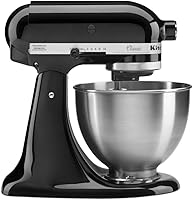
The Classic's single Onyx Black finish is neutral and easy to match. It won't stand out, which some cooks prefer in a small kitchen.
Does color affect how the mixer works?
No. The finish is cosmetic, and the mixing performance is the same across colors.
Pick the color you like, since it doesn't change the bowl, speeds or attachments.
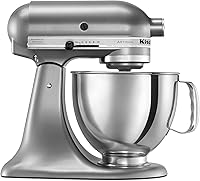
The Milkshake finish shown on the Artisan is one of the lighter options. If you want a mixer that blends into a pale kitchen, it's a good example of the palette.
Do both mixers take the same attachments?
Yes, both use a hub-powered attachment port, and KitchenAid lists 10 or more optional attachments for each. A pasta maker, food grinder or spiralizer you buy for one should fit the other.
Both mixers run the same 10 speeds, from a slow stir to a fast whip. KitchenAid describes speed 8 for whipping cream and the stir speed for combining ingredients.
That shared speed range and hub mean the attachments are the bigger long-term investment. The mixer you choose now sets the base for that collection.
Our guide to whether KitchenAid stand mixers are worth it looks at how the attachment ecosystem adds value over time. If you plan to grow into pasta and grinding, both models support that path.
Which attachments matter most?
The flat beater handles cakes, cookie dough and frostings. The dough hook kneads bread, and the wire whip is for cream and egg whites.
Beyond the box, the hub opens up the wider KitchenAid range. A grinder or pasta roller turns the mixer into more than a baking tool.
The Artisan's larger bowl suits bigger attachment batches, such as a full batch of pasta dough. The Classic is fine for smaller runs.
How the speed range plays out in a recipe
The 10 speeds are the same on both mixers, but the bowl size changes how you use them. A slow stir on the Artisan can combine a bigger pile of dry ingredients in one pass.
Speed 8 for whipping cream works the same on either model. The Classic's smaller bowl means less cream per batch, so you may need two rounds for a large dessert.
KitchenAid rates both mixers at 120 volts. Neither needs special wiring, so the electrical side is a draw.
Which mixer is right for your kitchen?
Choose the Artisan if you bake often, want a pouring shield and care about color; choose the Classic if you bake small batches and want the simpler model. The right pick depends on your batch size and how much you value the extras.
A frequent baker who doubles recipes gets more from the 5-quart bowl. The shield also saves cleanup on flour-heavy days.
Someone who bakes occasionally, or lives alone, may never fill the larger bowl. The Classic's 4.5-quart capacity still covers a cake, a batch of muffins or a bowl of whipped cream.
Who should buy the Artisan?
Buy the Artisan if you bake for a family or a crowd and want one batch to cover it. The bigger bowl and the shield are the reasons to step up.
It also suits anyone who wants the mixer to match the kitchen. The color range is the widest reason to choose it over the Classic.
Who should buy the Classic?
Buy the Classic if your batches are modest and you'd rather not pay for capacity you won't use. It shares the same speeds and tilt-head access as the Artisan.
It's also the tidier pick for a small cupboard. The smaller bowl leaves more room on the shelf.
If you're weighing brands as well as models, our KitchenAid vs Bosch mixer comparison covers how the two brands differ. And if size within the KitchenAid line is the real question, KitchenAid Artisan vs Artisan Mini looks at the smaller sibling.
Which mixer wins on value?
The Artisan wins for most buyers, because the larger bowl and included shield justify the step up for regular baking. The Classic wins on value only when its smaller capacity truly matches your habits.
The Classic is the entry point into the KitchenAid tilt-head line. It keeps the metal build, the 10 speeds and the attachment hub, and it costs less than the Artisan.
The Artisan adds capacity, a handled bowl, a shield and color choice. Those extras are the reason most kitchens end up with the bigger model.
Neither mixer is a mistake. The Classic is a capable small-batch machine, and the Artisan is the one to buy when you want room to grow.
The verdict in one line each
Buy the Artisan if you bake often, want bigger batches and like the color options. Buy the Classic if you bake smaller amounts and want the simpler, more compact model.
Either way, you're getting the same tilt-head design, 10 speeds and attachment hub. The difference is how much bowl and how many extras you want to pay for.
If a different brand is also on your shortlist, our Smeg vs KitchenAid mixer comparison can help you decide between them. And when the batch size question comes down to bowl capacity, the Artisan vs Artisan Mini guide shows how the smaller model compares.
Frequently asked questions
Is the KitchenAid Artisan worth the extra cost over the Classic?
For most bakers, yes. The Artisan adds a larger 5-quart bowl and a pouring shield, which make bigger batches and messy additions easier.
If you mostly mix small amounts and want the simpler model, the Classic covers the basics.
Do the Artisan and Classic use the same attachments?
Both use a tilt-head design and the same style of hub-powered accessories, so the mixing and hub attachments you buy for one should fit the other. Check the fit for the exact model you own before ordering an accessory.
How many cookies can each mixer handle in one batch?
KitchenAid says the Artisan's 5-quart bowl mixes up to 9 dozen cookies using the flat beater, while the Classic's 4.5-quart bowl handles up to 8 dozen. Those figures assume 28g of dough per cookie.
Which mixer is better for small kitchens?
The Classic's smaller bowl makes it the tidier choice when cupboard space is tight. Both mixers are tilt-head models with the same 10 speeds, so the main difference for a small kitchen is the bowl size and the extra pouring shield.
Can I use the pouring shield on the Classic?
The Artisan includes a pouring shield in the box and the Classic does not. You can buy a shield as a separate accessory, but check that it fits your model's bowl before ordering.