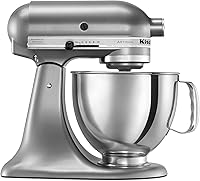
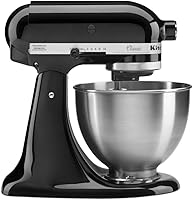
What to Make With a KitchenAid Stand Mixer
With a KitchenAid stand mixer you can make bread dough, cookie and cake batter, whipped cream, frosting, and mashed potatoes, all in the bowl. The power hub also runs attachments that roll pasta, slice vegetables, and grind meat.
On this page (8 sections)
- What can you make in the mixing bowl itself?
- How do you make bread and pizza dough with the mixer?
- What batters and doughs does the flat beater handle?
- How do you whip cream and egg whites in the mixer?
- How do you make mashed potatoes in a stand mixer?
- What can you make with the front hub attachments?
- Which projects are easiest for a first-time mixer owner?
- What should you make first with your KitchenAid stand mixer?
What to make with a KitchenAid stand mixer comes down to three jobs: mixing in the bowl, kneading with the dough hook, and running an attachment on the front hub. The bowl covers bread, cake, cookies, frosting, whipped cream, and mashed potatoes.
The hub opens up pasta, slicing, shredding, and grinding meat.
Start with what you actually cook in a week. A baker who makes sandwich bread twice a week will get more from the dough hook than from a pasta roller.
A household that shreds cheese and vegetables by hand every few days gets the most value from the slicer and shredder.
What can you make in the mixing bowl itself?
The bowl handles anything that needs stirring, creaming, or whipping. That covers most baking projects and a surprising amount of savory cooking, and it's the first thing to try when you unbox the mixer.
- Bread and pizza dough with the dough hook
- Cookie dough and cake batter with the flat beater
- Whipped cream and egg whites with the wire whip
- Buttercream and royal icing for cakes
- Mashed potatoes and shredded cooked chicken
The bowl is the mixer's core and the reason most people buy one. If you're still deciding between models and what each one can do, what is a stand mixer used for lays out the bowl jobs and the hub jobs side by side.
One tip before you start: read the speed guide in the manual, because each tool has a top speed it's built for.
How do you make bread and pizza dough with the mixer?
Use the dough hook on low speed and let the mixer knead for you. Add flour gradually and stop when the dough pulls away from the bowl and feels smooth.
- Combine water, yeast, and flour in the bowl.
- Mix on low until no dry flour remains, about a minute.
- Knead on low to medium for 6 to 10 minutes, depending on the recipe.
- Let the dough rise, shape it, and bake.
The dough hook does the work that would take 10 minutes by hand. Stay within the flour weight your model's manual lists, since a tilt-head can strain on very stiff dough.
For pizza night, the same hook handles a wet, slack dough on low speed. If your mixer starts rattling during a long knead, how to fix a noisy KitchenAid stand mixer covers the usual causes.
What batters and doughs does the flat beater handle?
The flat beater is the everyday tool for creaming and combining. It suits butter and sugar, eggs, cake batter, cookie dough, muffins, pancakes, and quick breads.
Cream butter and sugar on medium speed until pale and fluffy, then drop to low for eggs and dry ingredients. A beater with a scraper edge helps on sticky batters by cutting down on bowl scraping.
For stiff cookie dough, stop as soon as the flour disappears so the dough stays tender.
The beater also mixes meatloaf, meatballs, and shredded chicken for sandwiches. It's the tool you'll reach for most, so keep it in the bowl between projects.
Avoid running it on high with thick mixtures, since the batter can climb the bowl wall.
How do you whip cream and egg whites in the mixer?
Use the wire whip and watch closely, because cream and egg whites go from soft to overwhipped fast. Start on low to avoid splatter, then move up to medium-high.
Whipped cream for a cake or a bowl of berries takes just a few minutes in a chilled bowl. Egg whites for meringue or soufflé need a clean, dry bowl with no trace of fat.
Stop at soft peaks for folding into batter and stiff peaks for meringue. Our walkthrough of how to make whipped cream in a stand mixer covers the speeds, bowl prep, and how to rescue a batch that went too far.
For frosting, the whip creams butter and sugar into buttercream in a few minutes.
How do you make mashed potatoes in a stand mixer?
Cook the potatoes until tender, then use the flat beater on low speed to mash them. Add warm milk and butter gradually and stop as soon as the mixture looks smooth.
Overmixing is the real risk. Potatoes can turn gluey if the beater keeps working them after the lumps disappear.
Add dairy warm rather than cold so the mash stays fluffy. Our guide to how to make mashed potatoes with mixer gives the full method and the amounts.
The same beater mixes a meatloaf or a batch of mashed sweet potatoes without pulling out a second appliance.
What can you make with the front hub attachments?
The front hub turns the mixer into a pasta maker, a slicer, a shredder, and a meat grinder. Each attachment locks into the round port on the front of the head in place of the flat beater.
These attachments use the mixer's motor, so you don't need a separate machine on the counter. The trade-off is one project at a time: the bowl has to come off while the attachment runs.
Pick the ones that match how you cook, and store the rest in their cases.
Which pasta attachment fits most kitchens?
The KitchenAid 3-Piece Pasta Roller and Cutter Set KSMPRA includes a pasta roller, a spaghetti cutter, a fettuccine cutter, and a cleaning brush. It rolls 6-inch sheets through 8 thickness settings.
KitchenAid says the stainless steel rollers and cutters give smooth rolling and clean cutting. The set needs hand wiping, so keep water away from the rollers.
This is the first hub attachment to buy if fresh pasta is a regular dinner in your house. Make the dough in the bowl, then swap the beater for the roller.
What can you slice and shred with the mixer?
The KitchenAid Fresh Prep Slicer and Shredder KSMVSA comes with a 3mm slicing blade, a 4mm medium shredding blade, and a 6mm coarse shredding blade. KitchenAid says the 2-in-1 food pusher takes both large and small vegetables, from cucumbers to celery.
The blades are dishwasher safe on the top rack, and the whole set packs into its own storage case. Use it for salad prep, coleslaw, hash browns, and pizza toppings.
Block cheese and firm vegetables shred cleanly, and the bowl underneath catches the pieces. It's the attachment that saves the most hand work in a busy kitchen.
What can you grind with the food grinder?
The KitchenAid Food Grinder KSMMGA includes fine, medium, and coarse grinding plates and two sausage stuffer tubes. It also has a large food tray and a storage case.
KitchenAid suggests pre-chilling the grinder in the fridge or freezer for a cleaner grind. Use the coarse plate for burgers and meatloaf, the fine plate for sausage and pates, and the tubes to stuff casings.
The grinder also handles hard cheese and fresh bread crumbs. It's the pick for anyone who buys ground meat in bulk or wants to control what goes into their burgers.
Which projects are easiest for a first-time mixer owner?
Start with whipped cream, then cookie dough, then bread. Each one teaches you how the mixer behaves before you take on a bigger project.
Whipped cream shows you the whip and the speed dial. Cookie dough shows you the beater and when to stop mixing.
Bread dough shows you the dough hook and how the motor sounds under a load. Once those three feel routine, the hub attachments are an easy next step.
A pasta roller or a slicer turns the mixer into a second appliance without adding another motor to the counter.
What should you make first with your KitchenAid stand mixer?
Pick one bowl recipe and one hub project and do them this week. A batch of cookie dough and a bowl of whipped cream cover the beater and the whip, and they take under an hour together.
Bread dough and mashed potatoes come next once you know the speeds.
The attachments matter more than the model name. The Fresh Prep Slicer and Shredder KSMVSA suits salad and coleslaw duty, the Pasta Roller and Cutter Set KSMPRA fits a pasta night habit, and the Food Grinder KSMMGA serves burger and sausage cooks.
Decide which of those you'll use twice a month before you add it to the cart. If you're still choosing the mixer itself, the bowl jobs in what is a stand mixer used for will point you to the size and power you need.
Frequently asked questions
Can a KitchenAid stand mixer knead bread dough?
Yes. The dough hook on a tilt-head or bowl-lift model kneads yeast dough on low to medium speed, and the mixer's manual gives the maximum flour weight your model handles.
Stay within that limit so the motor doesn't strain.
What speed should I use for cookie dough?
Cream butter and sugar on medium speed first, then add eggs and dry ingredients on low. Most mixers stay steady for stiff doughs, but if the head starts to bounce, drop down a speed until the mixture smooths out.
Do the hub attachments fit every KitchenAid stand mixer?
KitchenAid says its hub attachments fit all household KitchenAid stand mixers. The power hub is the round port on the front of the head, and each attachment twists and locks into it in place of the flat beater.
What can I make in a stand mixer besides baking?
Mashed potatoes, shredded cheese and vegetables, ground meat for burgers and sausage, and fresh pasta all start in the mixer or one of its hub attachments. The bowl also handles whipped cream and frosting for desserts that never see the oven.